
Panel Discussion
Podgorica, Montenegro, 12 May 2026
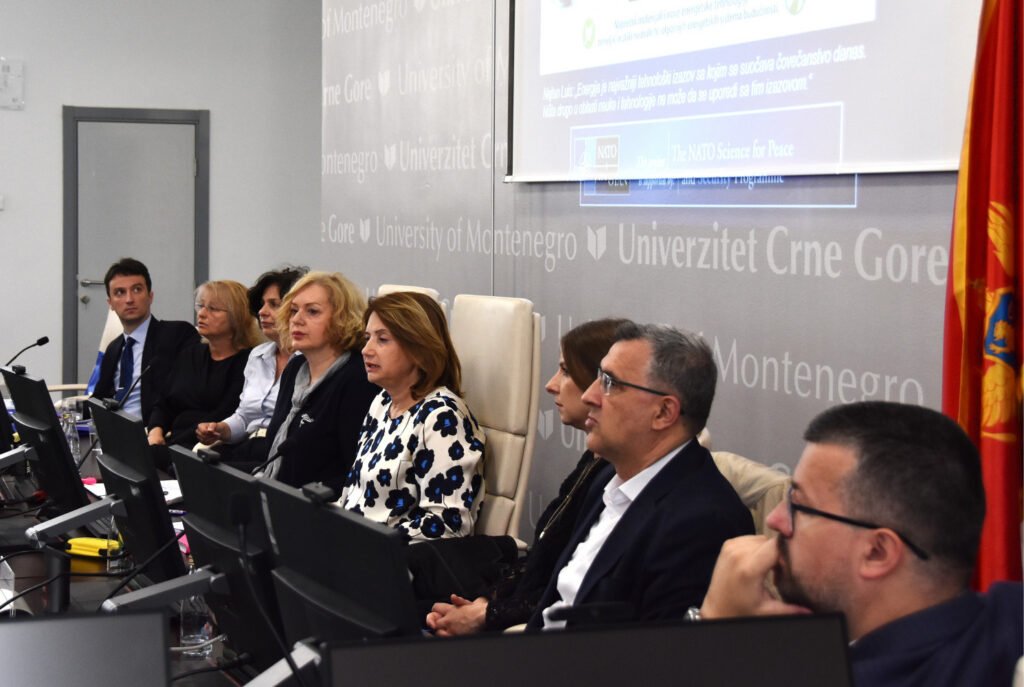
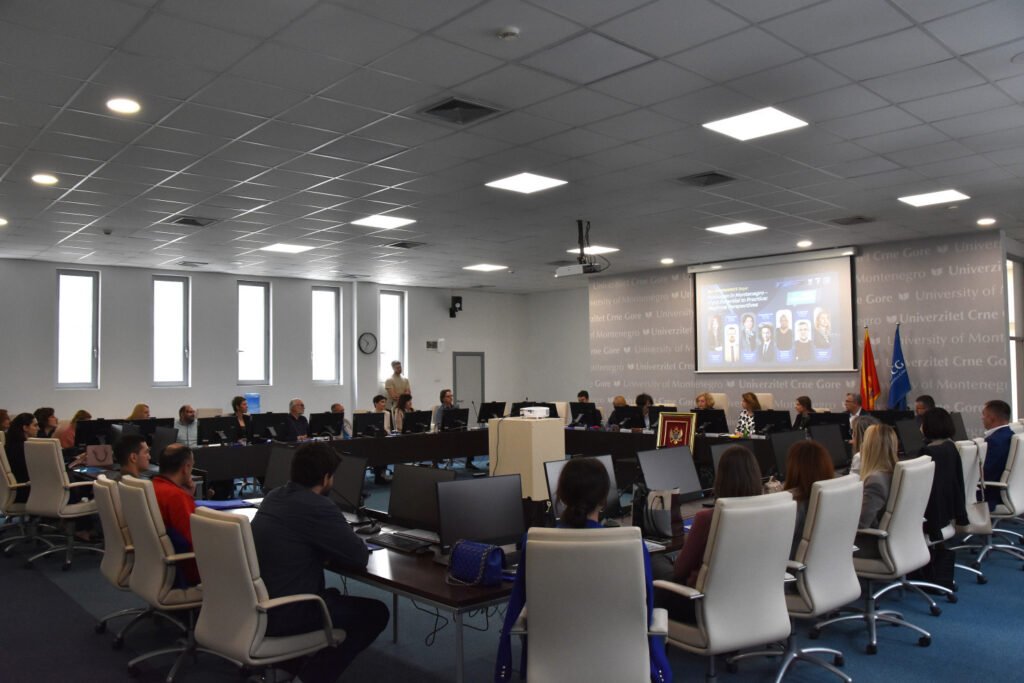
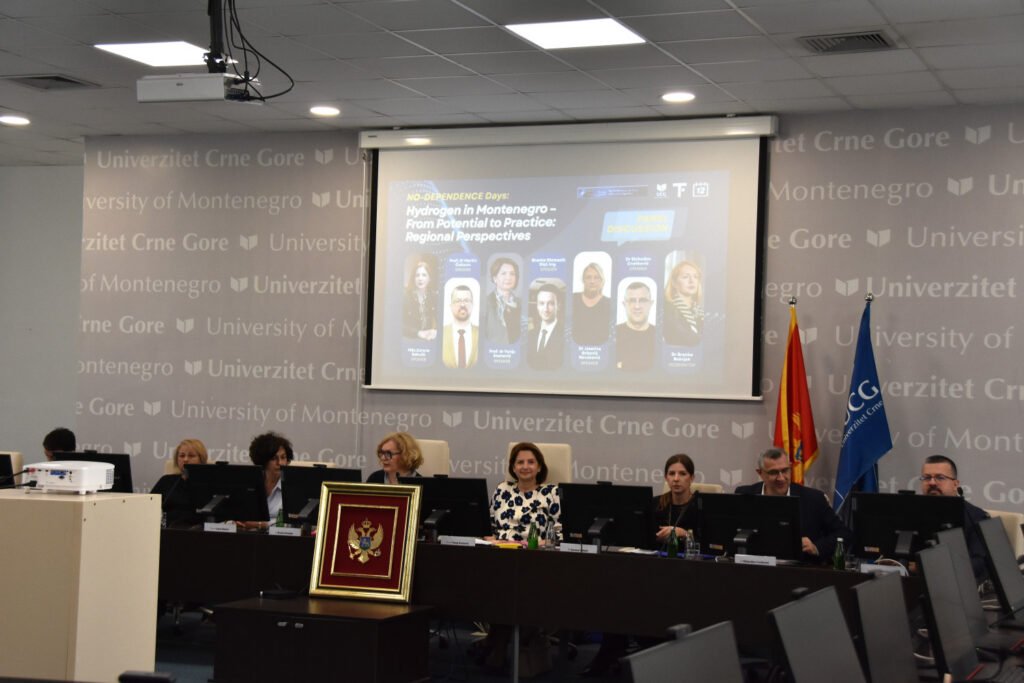
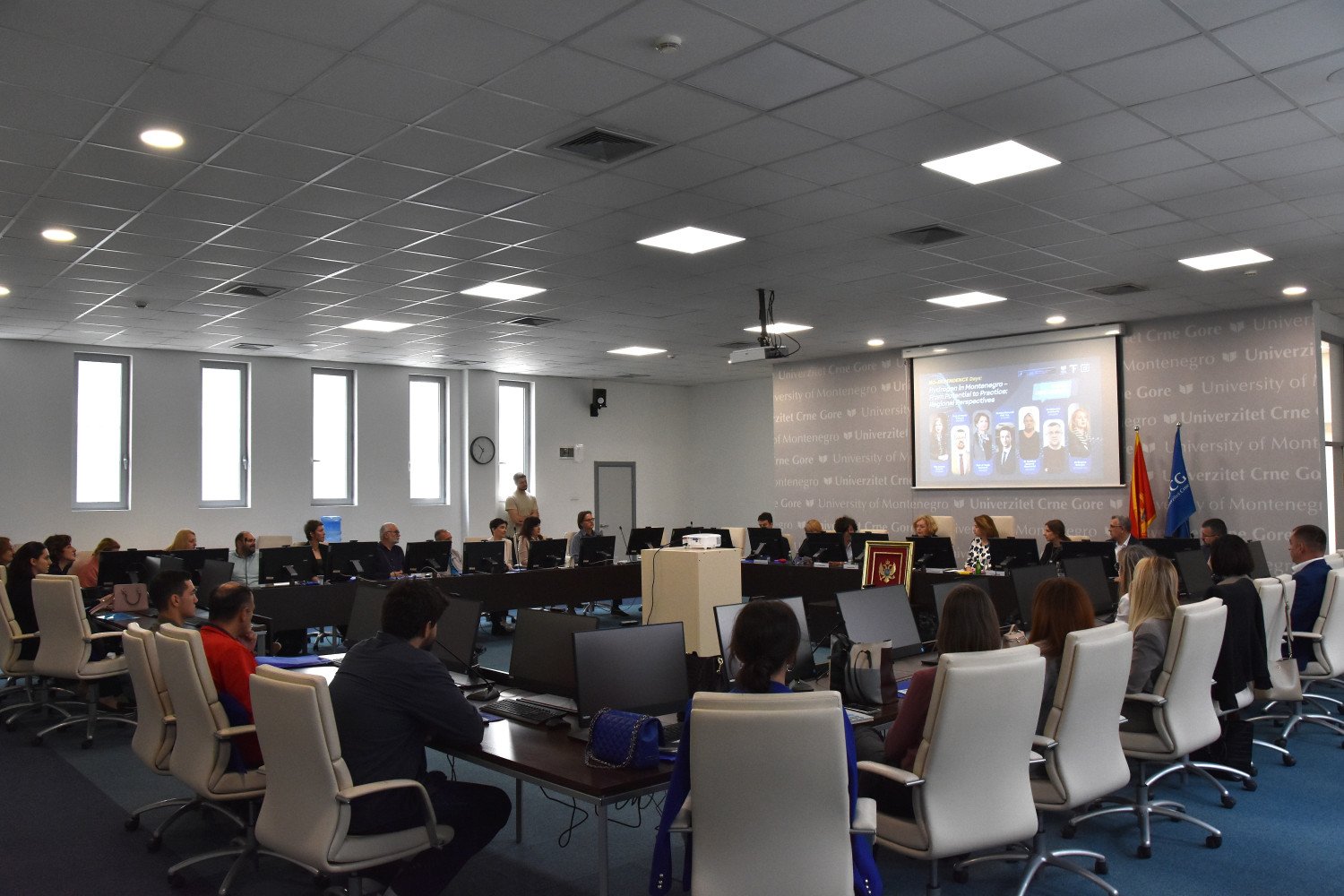
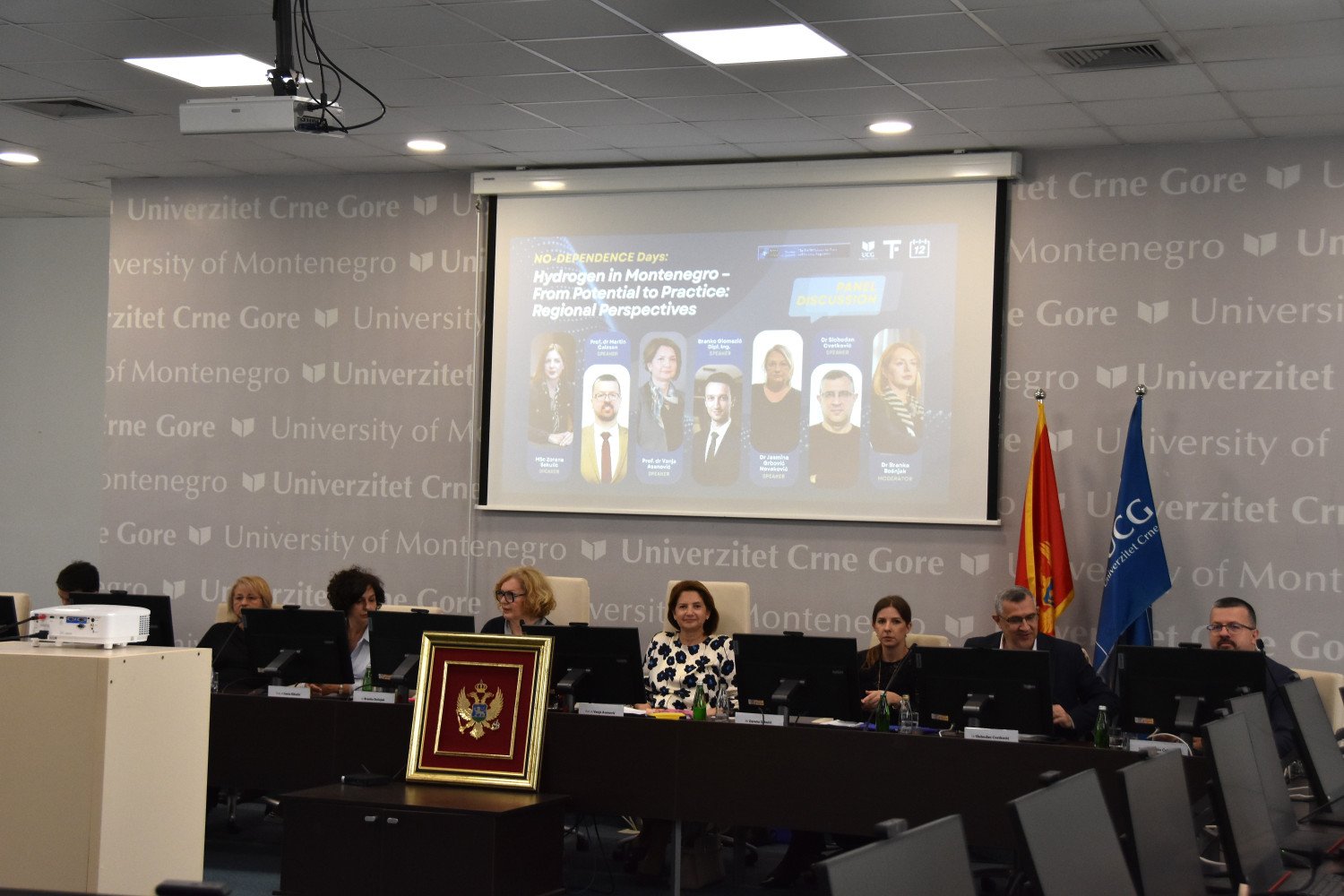
As part of the SPS MYP G6037 project – “Development of Hydrogen Compressors (NO-DEPENDENCE)”, implemented with the support of the NATO Science for Peace and Security Programme, the Faculty of Technology, University of Montenegro, organised the panel discussion “Hydrogen in Montenegro – From Potential to Practice: Regional Perspectives” on 12 May 2026 at the Rectorate Building of the University of Montenegro. The project is jointly implemented by researchers from the Faculty of Technology, University of Montenegro, the Vinča Institute of Nuclear Sciences – National Institute of the Republic of Serbia (University of Belgrade), and the Autonomous University of Madrid.
The event opened with introductory remarks by Prof. Irena Nikolić, Dean of the Faculty of Technology at the University of Montenegro, followed by Prof. Vanja Asanović presenting the NO-DEPENDENCE project and its research concept as an introduction to the panel discussion.
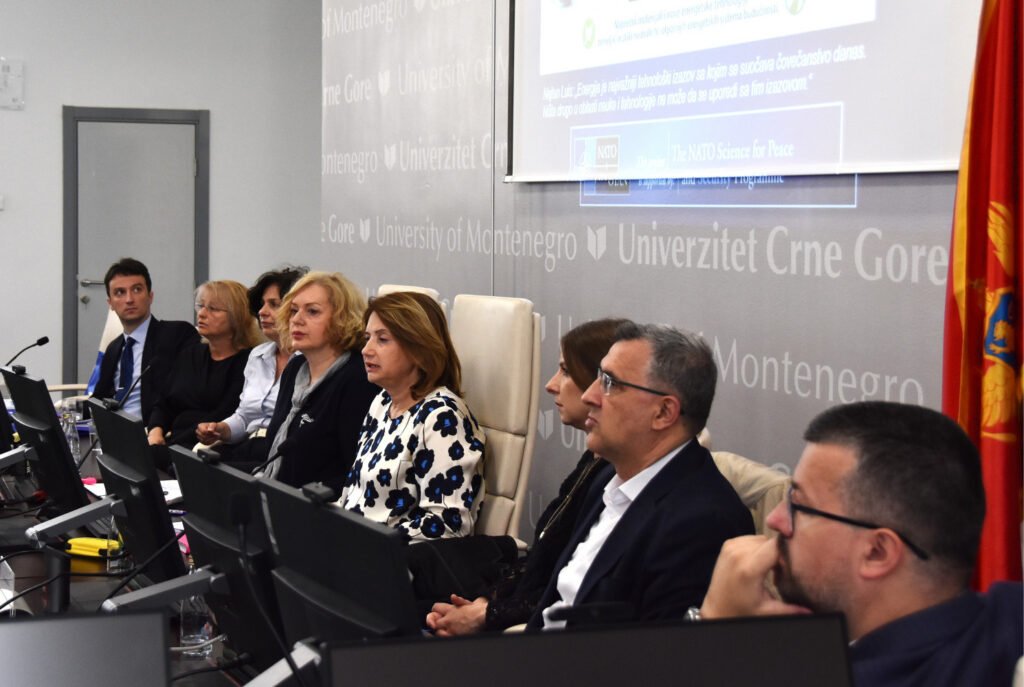
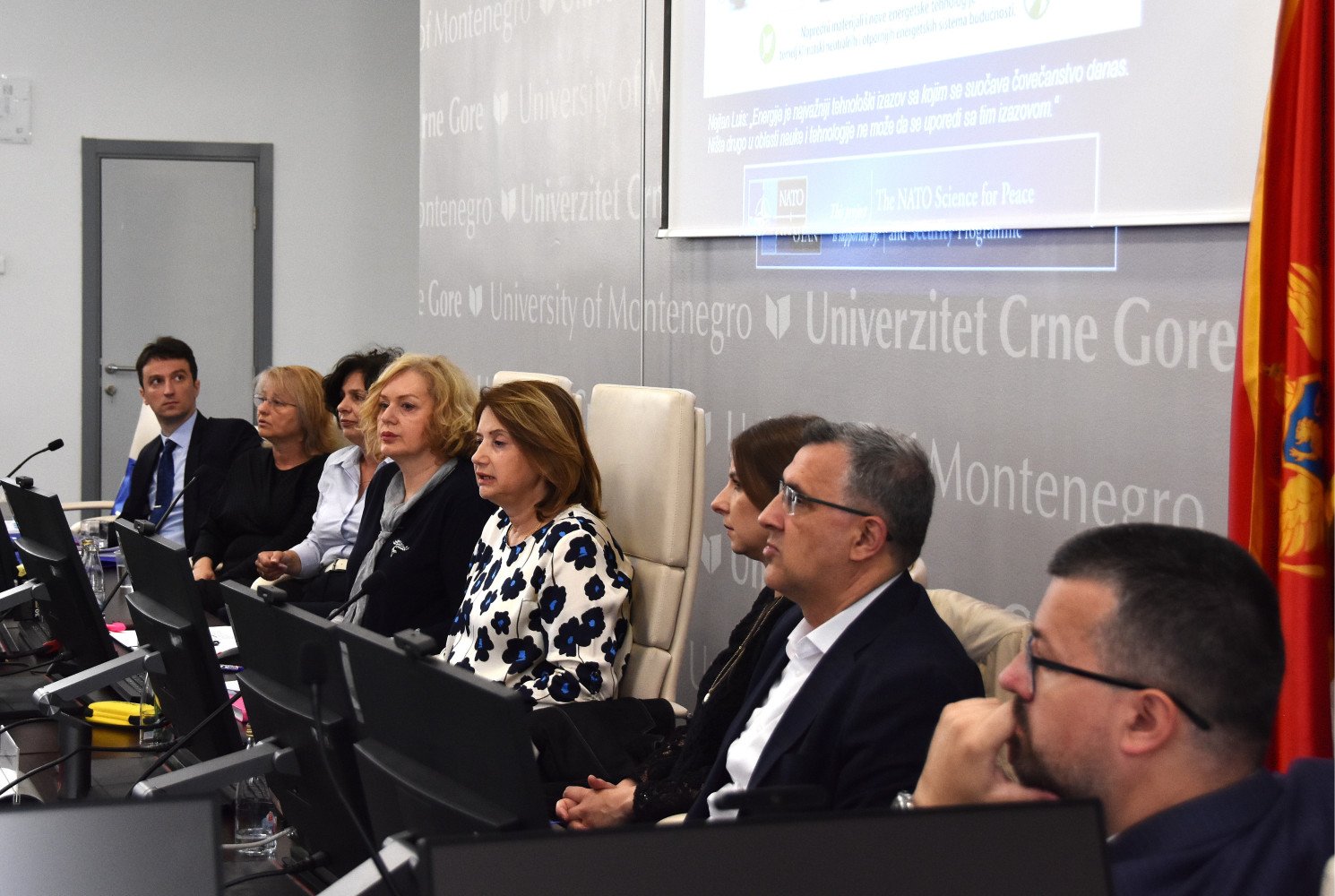
The panel discussion was moderated by Dr Branka Bošnjak, the Rector’s Advisor for Strategic Policy and Sustainable Development. The panel gathered representatives of public institutions, the energy sector, and the research community from Montenegro and the region to open a dialogue on the role of hydrogen technologies in future energy systems and the broader energy transition process.
The discussion was organised through two thematic sessions:
- Panel I – Context and Strategic Framework for the Development of Green Hydrogen in Montenegro
- Panel II – From Research to the Implementation of Green Hydrogen
Participants of the panel included:
- MSc Zorana Sekulić, Director General for Oil and Gas, Ministry of Energy and Mining of Montenegro;
- Branko Glomazić, Associate to the Technical Director for RES and Production, Electric Power Company of Montenegro (EPCG);
- Dr Slobodan Cvetković, Senior Research Associate, University of Belgrade, Institute of Chemistry, Technology and Metallurgy, Director of the Centre for Ecology and Technoeconomics;
- Dr Jasmina Grbović Novaković, Principal Research Fellow, Vinča Institute of Nuclear Sciences, National Institute of the Republic of Serbia, University of Belgrade, Head of the Centre of Excellence for Hydrogen and Renewable Energy;
- Martin Ćalasan, Faculty of Electrical Engineering, University of Montenegro;
- Vanja Asanović, Faculty of Technology, University of Montenegro.
During the discussion, participants emphasised that at a time when energy transition is becoming an imperative – not only due to Montenegro’s EU accession process and obligations related to energy, environment and climate policies, but also because of broader global climate challenges – green hydrogen is increasingly recognised as a potential component of future energy systems, particularly in sectors that are difficult to decarbonise.
It was highlighted that Montenegro, thanks to its significant renewable energy potential, especially hydropower, alongside growing solar and wind capacities, has an opportunity to recognise the development of a green hydrogen value chain as a strategic priority. At the same time, participants stressed that such development requires a clear regulatory framework, long-term strategic planning, infrastructure investments and strong regional and international cooperation.
The panel also addressed broader questions regarding the maturity of hydrogen technologies and market readiness for wider implementation. Discussions included whether industry is lagging behind what science can already offer, whether production or demand should be developed first, and whether the greater risk lies in investing too early or in failing to invest at all. Participants agreed that green hydrogen is not only a technological issue but also a matter of strategic decisions, investment readiness, and cooperation among science, institutions, and industry.
The discussion further emphasised that the development of green hydrogen will not occur spontaneously, but requires timely decisions, investments and coordinated action among different societal actors in Montenegro and the region. Although challenges remain significant, participants highlighted that the region has strong scientific and research potential, and the key factors will be the speed and determination in initiating concrete hydrogen-related projects.
Considering the complexity and multidisciplinary nature of this field, the idea of the University of Montenegro becoming a regional hub for green hydrogen development was also highlighted during the event. Particular emphasis was placed on the importance of parallel development of both strategic vision and concrete projects, accompanied by continuous education and capacity building at all educational levels.
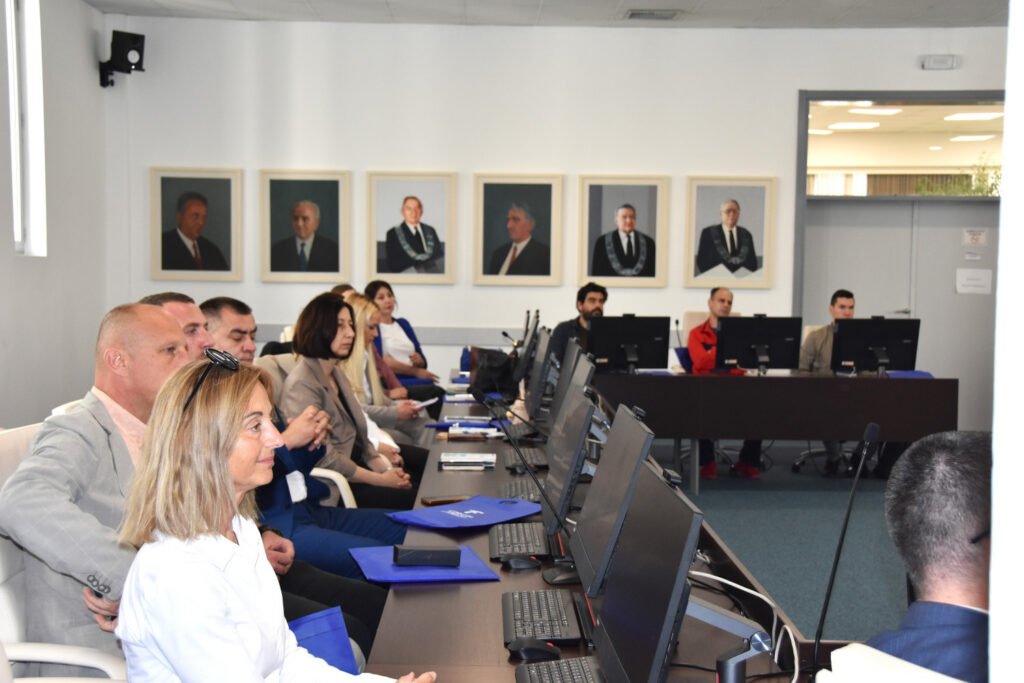
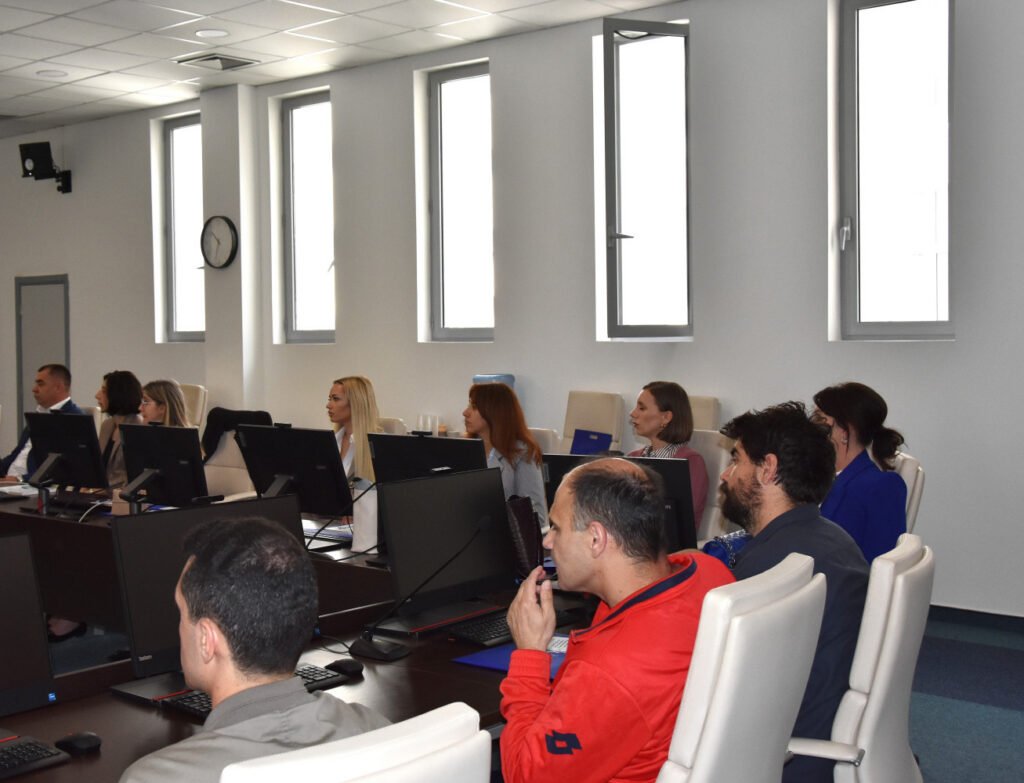
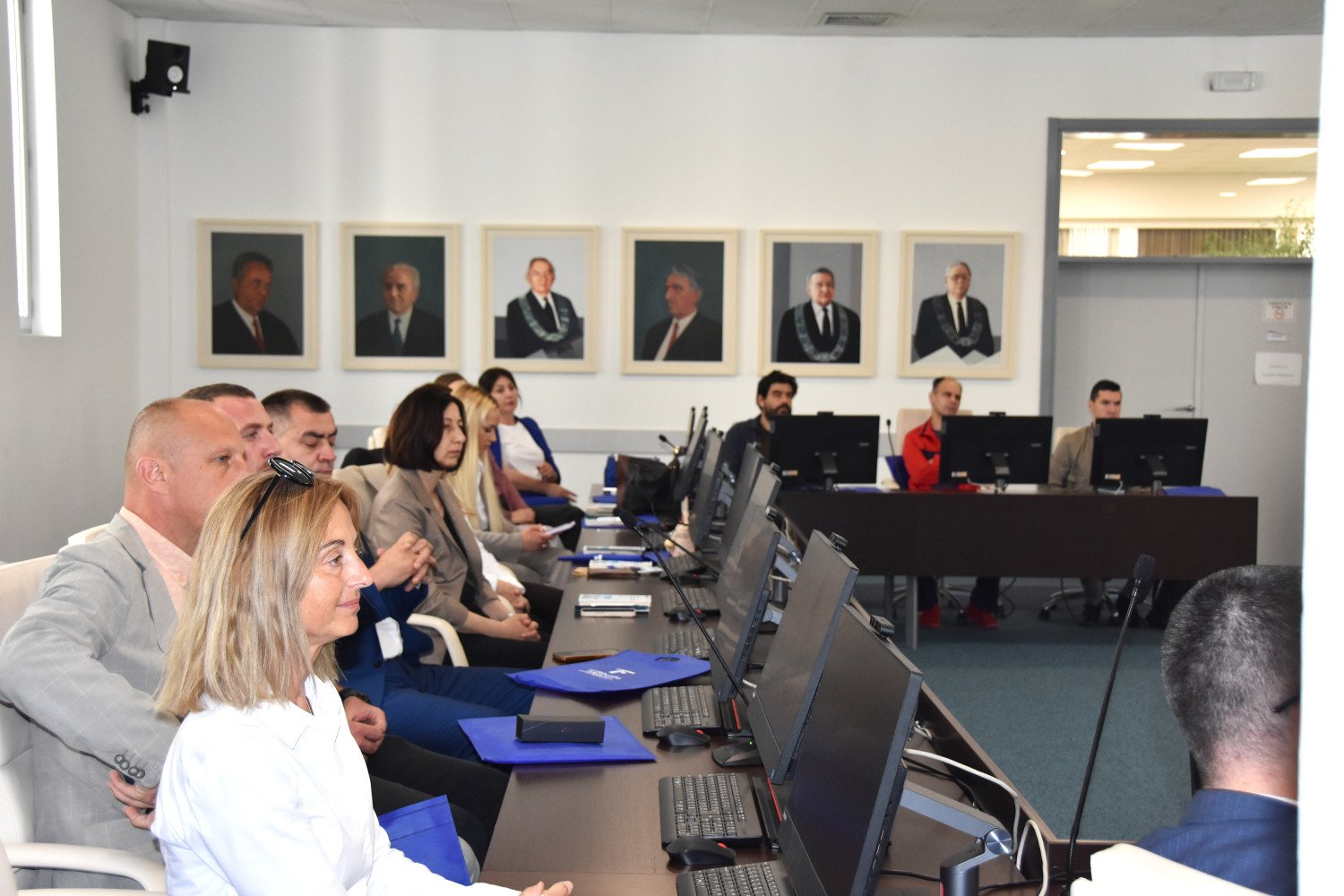
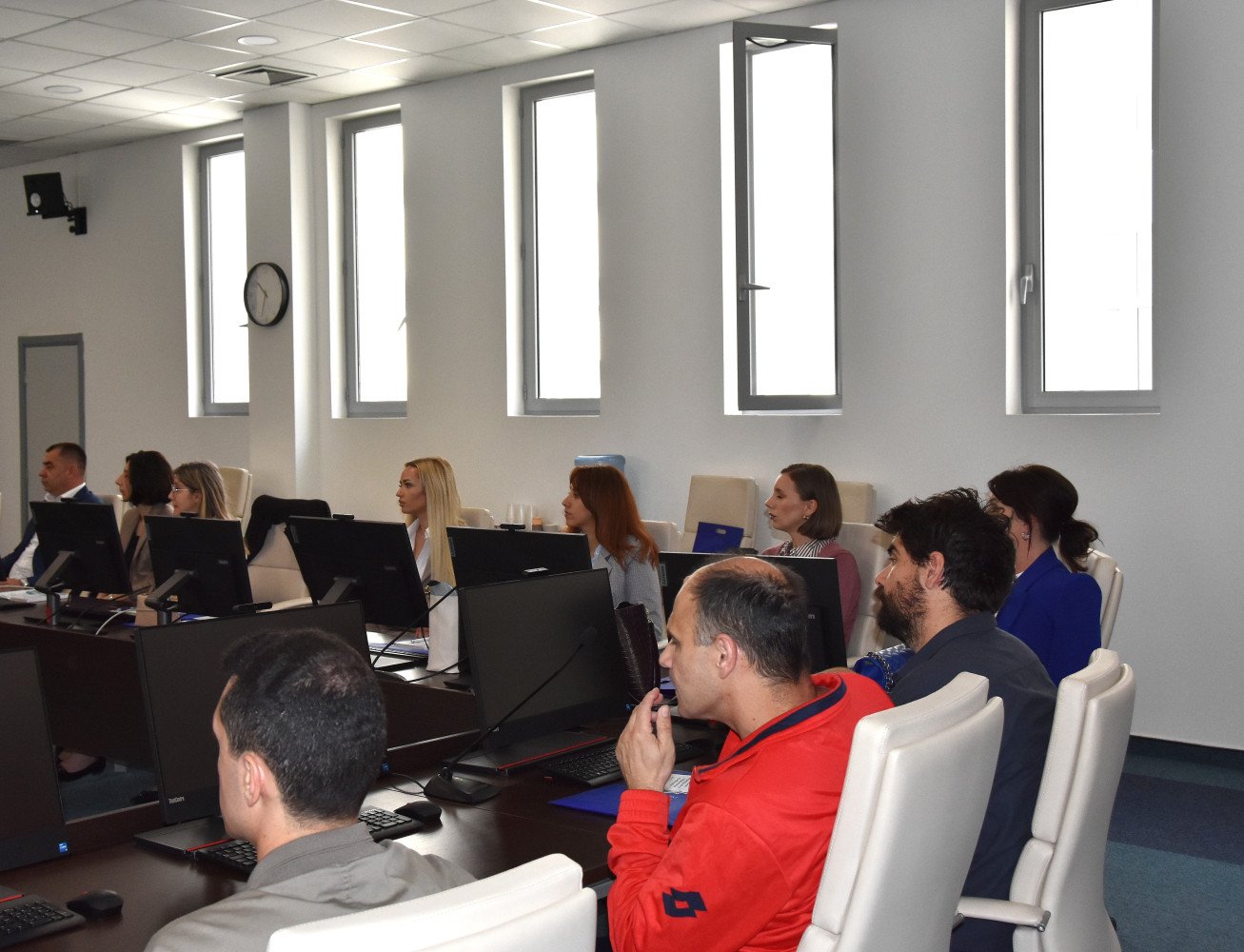
The event brought together representatives of universities, ministries, energy companies, regulatory institutions, students, and the wider professional community, creating an important space for dialogue on future energy systems and sustainable technological development.
Hydrogen is not a universal solution. But understanding where it matters – is.